ᓱᑲ ᐊᐢᑲᐤ
About
SCFN
Sucker Creek First Nation (Namipi Sipîsis) is a proud Cree community rooted in the principles of Treaty 8.
OUR NATION
Sucker Creek
First Nation
Sucker Creek First Nation (SCFN) is a Cree First Nation located in northern Alberta, Canada. We are a signatory to Treaty 8, signed in 1899, and our reserve lands are situated near the town of Kinuso in the Lesser Slave Lake region.
Our community has deep roots in the land, language, and traditions of the Nehiyaw (Cree) people. We are committed to preserving our cultural heritage while building a prosperous and self-sufficient future for all our members.
OUR STORY

Since 1899
Treaty 8 Members
Our
Mission
Healing, Empowerment, and Renewal
CORE VALUES
The Teachings That Guide Us
Respect (Kisewatisiwin)
We honour all life — the land, the water, the spirit world, and one another. Respect guides our words, actions, and decisions as we walk in balance with Creation.
Kinship (Wahkohtowin)
We are all related. Our strength comes from our connections — between families, generations, communities, and the land. Kinship reminds us that healing and growth happen together, not alone.
Resilience (Mâmaskâwisiwin)
Through centuries of challenge and change, our people have endured. We carry forward the spirit of resilience, transforming adversity into strength, and strength into opportunity.
Healing (Miyo-Pimâtisiwin)
We strive for wellness in body, mind, spirit, and emotion. Healing is both personal and collective — a journey that reconnects us to our true selves, our ancestors, and our community.
Stewardship (Pimâtisiwin Askiy)
We are caretakers of the land and water entrusted to us by the Creator. Through stewardship, we protect and sustain the gifts of the earth for future generations.
Integrity (Tapwewin)
We walk in truth and uphold the promises of our ancestors. By honouring our Treaty Rights, we strengthen our sovereignty and ensure fairness, justice, and self-determination for our Nation.
Culture and Language (Nehiyawewin)
Our language and culture are the heartbeat of who we are. Through them, we remember our stories, express our identity, and connect with the spirit of our people.
OUR HISTORY & GOVERNANCE
Sucker Creek History
Key Historical Milestones:
Treaty 8 Signatory: SCFN became a signatory to Treaty 8 in 1899, establishing a foundational relationship with the Crown and ensuring rights to land, hunting, fishing, and cultural practices. The treaty was signed at Willow Point, a sacred site in Sucker Creek First Nation.
Harold Cardinal’s Advocacy: Harold Cardinal, a prominent SCFN member, authored “The Unjust Society”, a pivotal work that challenged the federal government’s 1969 White Paper and played a significant role in defending Treaty rights.
Cultural Preservation: Despite challenges such as the residential school system, SCFN has maintained and revitalized its cultural practices, language, and spiritual traditions, fostering resilience and community cohesion.
Community and Governance:
SCFN is governed by a Chief and Council. The community is part of the Lesser Slave Lake Indian Regional Council and has a registered population of over 3,333 members. The reserve spans approximately 5,987 hectares and is home to nearly 800 residents.
Our Ancestors: The Original Band Members of Reserve 150A
Our connection to this land was solidified in September 1901, when Reserve No. 150A was officially surveyed for Headman Moostoos and a portion of Chief Kinoosayo’s band. We proudly honor the original families who secured our territory, including Headman Moostoos, Okimow, Felix Estatchekoon, Alex Young, Michel Misinicunape, Bazil, Edward, Benjamin, Seekachees, Joseph Matuskees, Alexander Moostoos, Mary Spoon, Marie Seeasapwayretus, Joseph Keesaynees, Francois Keesaynees, Baptiste Moostoos Keesaynees, Squasis, Martineau, Angelle Tranquille, Mary Beaver, and Casimere Cardinal. In 1912, as our community grew, additional lands were surveyed to welcome more families into our nation.
Cultural and Spiritual Life:
SCFN’s cultural identity is deeply intertwined with its language, ceremonies, and connection to the land. The community hosts various cultural events, including powwows and traditional gatherings, which serve as vital expressions of identity and unity.
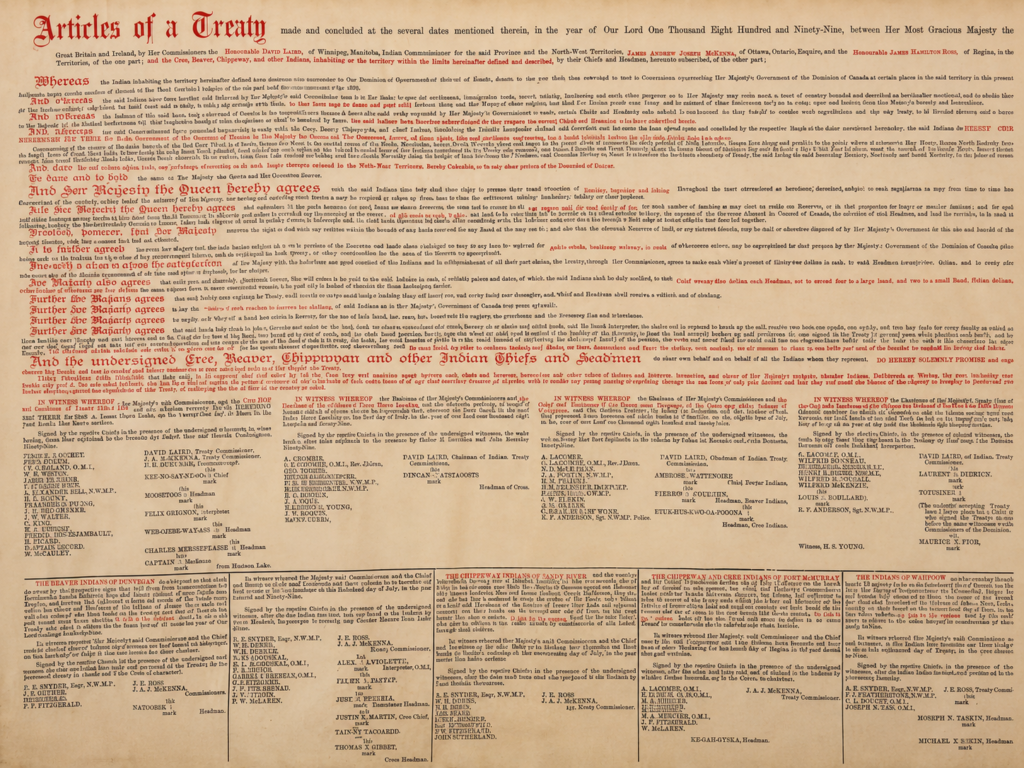
1899
Year Treaty 8 was signed
TREATY 8
Our Treaty Rights
Treaty 8 was signed on June 21, 1899, between the Crown and various First Nations in the region that is now northern Alberta, northeastern British Columbia, and northwestern Saskatchewan. Sucker Creek First Nation is a proud signatory to this treaty.
The treaty guarantees our rights to hunt, fish, and trap on our traditional lands, as well as our rights to education, health care, and other essential services. We continue to assert and protect these rights for all our members.
WHAT WE DO
Our Services
Education
Supporting students from early childhood through post-secondary education.
Health & Wellness
Comprehensive health services for all SCFN members.
Housing
Safe, affordable housing for on-reserve members.
Economic Development
Creating opportunities for business and employment.
Land & Environment
Protecting our traditional lands and natural resources.
Social Services
Supporting families and individuals in need.